- Mon-Sat 9:00 am-6:00 pm
- +91-95125-32425
- rushabh_ppcaps@yahoo.co.in


Rushabh Industries
Latest Blogs And Updates
How to Choose the Right Aluminium PP Cap Size for Your Bottle?
Selecting the correct bottle closure is one of the most important decisions in packaging design. Whether you manufacture pharmaceutical syrups, beverages, nutraceutical products, chemicals, or specialty liquids, choosing the wrong cap size can lead to leakage, poor sealing performance, product contamination, customer complaints, and unnecessary packaging costs.
An aluminum pp cap is widely used across multiple industries because it provides tamper evidence, reliable sealing, product protection, and an attractive appearance. However, simply choosing a cap is not enough. The cap size must match the bottle neck finish precisely to ensure optimal performance. This guide explains how to select the right ROPP cap size, the factors that influence compatibility, and the common mistakes buyers should avoid when sourcing bottle closures.
Why Cap Size Matters?
Many buyers focus primarily on the bottle itself and treat the cap as a secondary component. In reality, the closure system plays a critical role in maintaining product quality throughout storage, transportation, and end-user handling.
A properly matched cap size helps:
- Prevent leakage during transit
- Maintain product freshness
- Ensure tamper evidence
- Improve shelf appearance
- Reduce product returns
- Meet industry packaging standards
Even a small mismatch between the bottle neck and cap dimensions can affect sealing performance and create operational challenges during filling and capping.
Understanding Bottle Neck Finishes
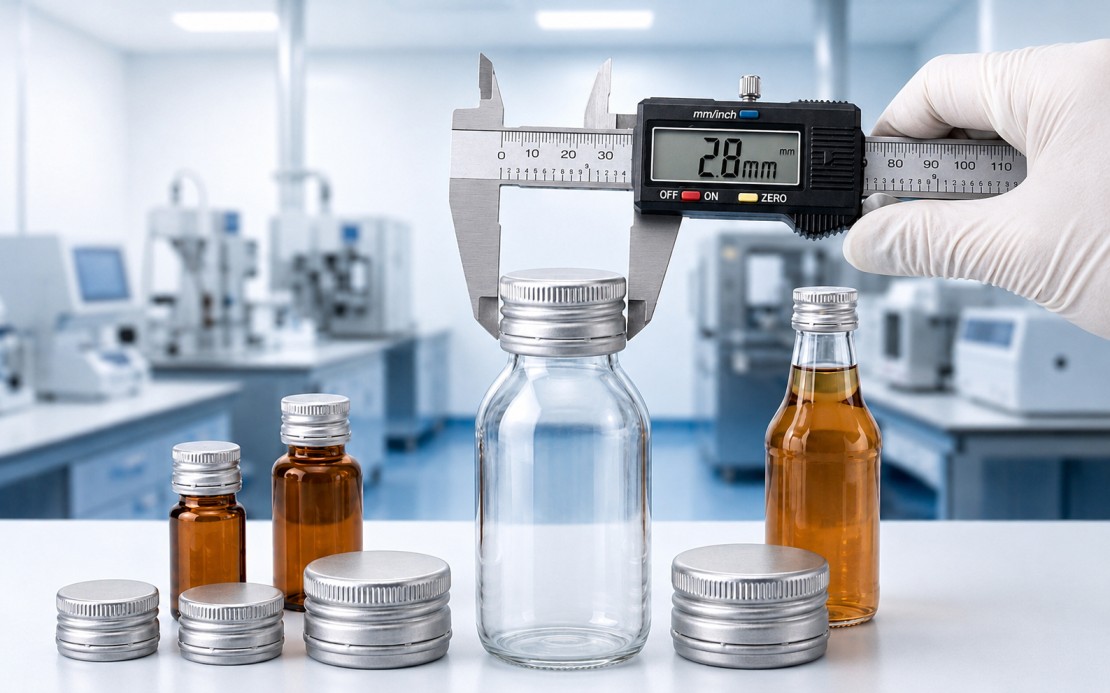
Before selecting a cap size, it is important to understand bottle neck finishes. The neck finish refers to the external dimensions and thread configuration of a bottle opening. ROPP closures are designed to be applied onto specific neck finishes where the cap is mechanically rolled and threaded during the capping process.
The most commonly used neck sizes include:
- 22mm Aluminium Caps
- 25mm Aluminium Caps
- 28mm Aluminium Caps
- 31.5mm Aluminium Caps
- 38mm Aluminium Caps
Each size is designed for specific product categories and bottle types. For Example:
- 22mm closures are commonly used for pharmaceutical syrups.
- 25mm closures are widely used for healthcare products and liquid formulations.
- 28mm closures are frequently found in beverage packaging.
- Larger sizes such as 31.5mm and 38mm are often used for specialty applications and larger containers.
Understanding the exact neck dimensions of your bottle is the first step toward selecting a compatible closure.
Aluminium PP Caps for Pharmaceutical Packaging
Pharmaceutical packaging requires a high level of consistency, safety, and regulatory compliance. Many liquid medicines, cough syrups, tonics, and healthcare products rely on aluminium pp caps because they provide secure sealing and tamper evidence.
When selecting a closure for pharmaceutical applications, buyers should evaluate:
- Bottle neck dimensions
- Product viscosity
- Filling line compatibility
- Child-resistant requirements
- Tamper-evident performance
- Storage and transportation conditions
For pharmaceutical manufacturers, choosing the correct cap size is not just a packaging decision. It is also part of maintaining product integrity throughout the supply chain.
Factors to Consider When Selecting the Right Cap Size
1. Product Type
Different products have different packaging requirements. Such As:
- Syrups require reliable leak prevention.
- Beverages need secure sealing during transportation.
- Nutraceutical products may require additional liner options.
- Chemical products often demand enhanced resistance to external conditions.
The product itself often influences which bottle and closure combination works best.
2. Bottle Material
ROPP closures are commonly used with:
- Glass bottles
- PET bottles
- HDPE containers
Each bottle material may have slight differences in neck finish specifications. Always verify compatibility before placing a bulk order.
3. Filling and Capping Equipment
Your packaging line should be considered when selecting a closure size. Modern ROPP capping machines are designed to work with specific closure dimensions and neck finishes. Using the wrong cap size can result in:
- Improper threading
- Seal failures
- Production downtime
- Increased rejection rates
Always consult both your bottle supplier and cap manufacturer before finalizing specifications.
4. Liner Requirements
Some products require additional sealing protection through liners. Common liner options include:
- EPE liners
- Induction seal liners
- Wad inserts
- Customized sealing materials
The choice of liner can affect closure performance and should be considered during cap selection.
5. Transportation Conditions
Products that travel long distances or are exported internationally face greater handling stress. Export-oriented manufacturers should evaluate:
- Temperature variations
- Vibration during transportation
- Stacking conditions
- Long storage periods
A properly matched closure helps reduce the risk of leakage and packaging failures during shipment.
Aluminium Syrup Caps and Their Size Requirements
Syrup manufacturers often use aluminium syrup caps because they provide excellent sealing performance and a professional appearance. The most commonly used sizes for syrup bottles are typically 22 mm and 25 mm, although requirements may vary depending on bottle design.
When choosing a syrup bottle closure, manufacturers should evaluate:
- Filling volume
- Bottle neck specifications
- Dispensing requirements
- Regulatory packaging standards
- Consumer convenience
A closure that fits correctly helps maintain product stability and ensures a consistent user experience.
Common Mistakes Buyers Make When Choosing Cap Sizes
1. Assuming All Bottles Use Standard Dimensions
Two bottles may appear identical while having different neck finish specifications. Always verify technical drawings and measurements rather than relying on visual inspection.
2. Choosing Based Only on Cost
The lowest-priced closure may not provide the required sealing performance. Packaging failures often cost significantly more than the initial savings from purchasing cheaper components.
3. Ignoring Filling Line Compatibility
A cap that works perfectly in testing may not perform efficiently on high-speed production equipment. Compatibility testing should always be completed before final approval.
4. Not Requesting Samples
Before placing large production orders, request samples and conduct:
- Leak tests
- Torque tests
- Transportation simulations
- Compatibility verification
This reduces risk and improves packaging reliability.
How Aluminium PP Caps Manufacturers Support Buyers?
Experienced aluminium pp caps manufacturers typically assist customers throughout the selection process.
Technical support may include:
- Bottle neck compatibility checks
- Product application recommendations
- Sample evaluation
- Closure customization
- Printing and branding options
- Export packaging support
Working with an experienced manufacturer can help prevent costly specification errors and improve overall packaging performance.
Quality Considerations When Evaluating Suppliers
When selecting a closure supplier, consider more than just pricing. Important evaluation factors include:
1. Manufacturing Consistency
Consistent dimensions ensure smooth performance during large production runs.
2. Material Quality
High-quality aluminum and food-grade materials contribute to better sealing performance and product safety.
3. Custom Printing Capabilities
Many brands require customized logos, colors, and branding elements on closures.
4. Industry Experience
Suppliers familiar with pharmaceutical, beverage, and export packaging requirements are often better equipped to provide practical recommendations.
5. Quality Control Processes
Look for manufacturers that maintain documented inspection and testing procedures throughout production.
How to Confirm the Correct Cap Size Before Ordering?
Follow these steps before placing a bulk order:
- Obtain the bottle neck finish specifications.
- Share technical drawings with your closure supplier.
- Request physical samples.
- Perform filling line trials.
- Conduct leakage and transportation testing.
- Verify liner compatibility.
- Approve samples before mass production.
This process helps eliminate uncertainty and reduces the risk of packaging failures.
Frequently Asked Questions
1. What is the most common aluminium ROPP cap size for syrup bottles?
The most commonly used sizes are 22mm and 25mm aluminium caps, although the correct size depends on the bottle neck finish and product requirements.
2. How do I determine the correct bottle neck finish?
Bottle manufacturers provide technical drawings that specify neck dimensions and finish details. These specifications should be shared with your closure supplier for compatibility verification.
3. Are aluminium caps suitable for export packaging?
Yes. When properly matched to the bottle and application, aluminium caps provide excellent sealing performance for domestic and international distribution.
4. Can I use the same cap size for different bottle designs?
Not always. Two bottles may have similar appearances but different neck finish specifications. Always confirm compatibility before ordering.
5. Do aluminium syrup caps require liners?
Many syrup applications use liners for additional sealing protection. The requirement depends on the product formulation, packaging regulations, and transportation conditions.
6. What happens if the cap size is incorrect?
Incorrect sizing can lead to leakage, improper sealing, capping issues, customer complaints, and product losses.
Conclusion
Choosing the right bottle closure involves much more than selecting a cap diameter. The correct ROPP cap size must match the bottle neck finish, product requirements, filling equipment, and distribution conditions.
By understanding bottle specifications, evaluating closure compatibility, and working with experienced suppliers, manufacturers can reduce packaging risks and improve product protection throughout the supply chain.
Whether you produce pharmaceutical syrups, beverages, nutraceuticals, or specialty liquid products, investing time in selecting the correct closure size helps ensure reliable sealing performance, smoother production operations, and greater customer satisfaction.


Kalpesh Shah is a packaging industry expert who writes about aluminium ROPP caps, sealing solutions, sustainable packaging, pharmaceutical closures, and packaging trends.